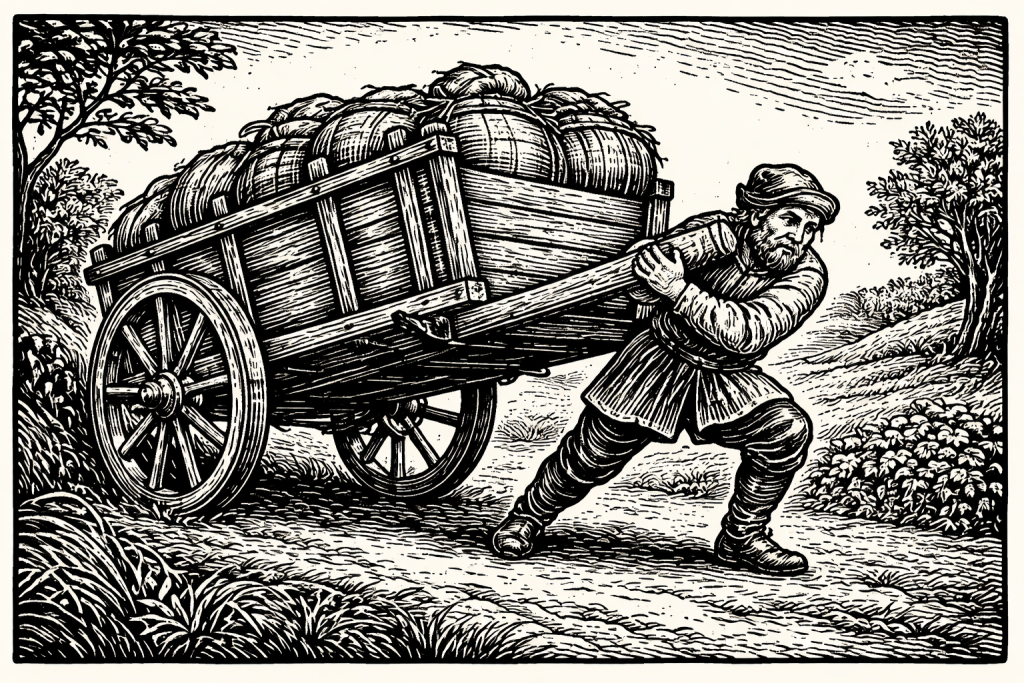
The Art of Calibrated Effort: Doing Exactly What’s Required

One of the principles I return to most often is deceptively simple: use the minimum amount of effort necessary to achieve the results you want. Not the minimum effort you can get away with, and not maximum effort as a matter of pride, but precisely the right amount. This sounds obvious, perhaps even lazy, but in practice it’s one of the hardest calibrations a leader can make. Most people err dramatically in one direction or the other, either grinding themselves into dust on problems that don’t require it, or convincing themselves that shortcuts won’t catch up with them.

The key word in this principle is necessary. Sometimes the minimum necessary effort is everything you have, every ounce of energy, every late night, every difficult conversation. When you’re navigating a critical product launch, managing a genuine crisis, or building something that will define your organization’s trajectory, half-measures will fail. The minimum necessary might be total commitment. But other times, the minimum necessary is literally zero personal effort because someone else is already handling it, the solution is obvious and doesn’t require your involvement, or the problem will resolve itself if you simply get out of the way. Both of these scenarios demand the same amount of effort from you: exactly what’s required, no more and no less.

The Two Failure Modes

I’ve observed two distinct patterns in how capable people miscalibrate their effort, and both are equally destructive to their effectiveness.

The first failure mode is unnecessary heroics. These are the people who treat every problem as worthy of their full attention and energy. They stay late to perfect things that were already good enough. They insert themselves into decisions their teams could make independently. They research exhaustively when a quick conversation would suffice. On the surface, this looks like dedication, and organizations often reward it because effort is visible while efficiency is not. But this pattern leads to burnout, creates bottlenecks, and paradoxically produces worse outcomes because finite energy gets spread across problems that don’t equally deserve it. I’ve known many leaders who wore their exhaustion as a badge of honor while their most important initiatives languished because they had no reserve capacity left.

The second failure mode is premature optimization—convincing yourself that things require less time, energy, or attention than they actually do. This is the person who ships before the code is ready because testing is tedious. Who has a difficult conversation in their head instead of out loud because it’s uncomfortable. Who skips the stakeholder alignment because they’re confident they already know what everyone thinks. This pattern is seductive because it feels efficient, and sometimes you get lucky and the shortcut works. But the compounding cost of cutting corners is severe: technical debt, broken relationships, misaligned teams, and problems that metastasize while you’re not looking.

Calibrating Correctly

The skill, then, is accurate assessment: understanding what a situation actually requires before deciding how much to invest. Several questions help me make this calibration:

  • What’s the cost of being wrong? High-stakes, irreversible decisions deserve maximum diligence. Low-stakes, reversible ones can tolerate faster, lighter approaches.
  • Who else can or should handle this? If someone on your team is capable and this falls within their domain, your involvement may actively harm the outcome by disempowering them.
  • What’s the real deadline? Not the artificial urgency, but the actual point at which delay causes harm. Many things feel urgent that aren’t.
  • Am I the bottleneck? Sometimes the fastest path is removing yourself from the process entirely.
  • What would good enough look like? Perfection is rarely the standard that matters. Understanding what sufficient actually means prevents both over-investment and under-investment.

These questions sound straightforward, but answering them honestly requires a particular kind of self-awareness. You have to notice when your ego is inflating a problem’s importance, when your anxiety is driving unnecessary activity, or when your discomfort is rationalizing shortcuts.

The Discipline of Restraint

What I’ve come to appreciate is that both kinds of miscalibration usually stem from the same root cause: discomfort with uncertainty. Overwork is often an anxiety response. If I just do more, surely that will guarantee success. Cutting corners is also an anxiety response: if I just declare this done, I don’t have to sit with the discomfort of ongoing effort. Neither actually addresses the uncertainty; they just provide the illusion of control.

The mature approach is to tolerate the uncertainty while making your best assessment of what’s actually required. This means sometimes watching a problem unfold without intervening, trusting that it will resolve without you. It means sometimes committing fully to something exhausting because you’ve accurately judged that this is one of the moments that demands it. And it means being willing to revisit your calibration when new information suggests you got it wrong. The goal isn’t to always be right about how much effort something needs — that’s impossible. The goal is to have a clear-eyed process for making the assessment and the flexibility to adjust.

Don’t make things more difficult or take longer than they have to. But don’t convince yourself that difficult things are easy just because you wish they were. The leaders I respect most have developed this calibration over time, and they apply their energy with intention rather than habit. They know when to push and when to wait, when to dive deep and when to delegate, when the minimum necessary is everything and when it’s nothing at all.


This is not laziness dressed up as wisdom; it’s the recognition that your capacity is finite and the demands on it are not, so spending that capacity wisely is itself a form of excellence.